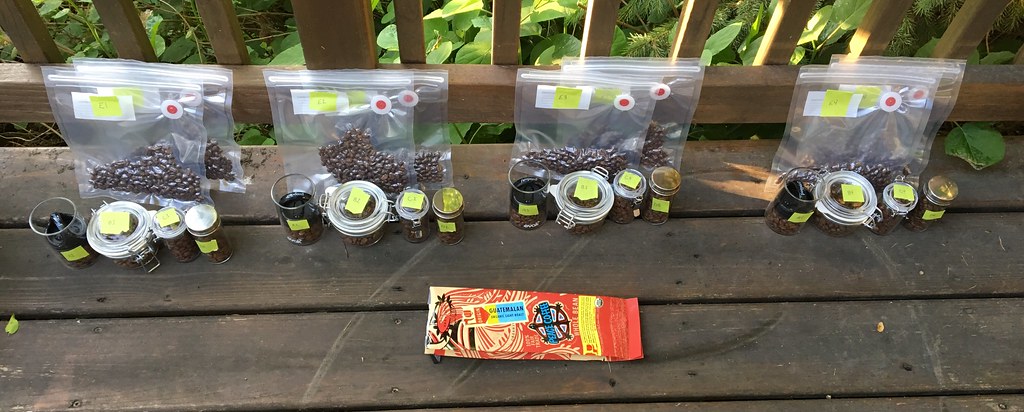
I decided to try a methodical coffee storage experiment. I'm using 5 different kinds of storage containers (plus one extra as a control), each with 33 grams (the exact amount I use each day to make coffee for Kivi and myself) of VERY fresh coffee, that was roasted yesterday (I wanted coffee roasted today, but I'll do that in the next iteration of this experiment).
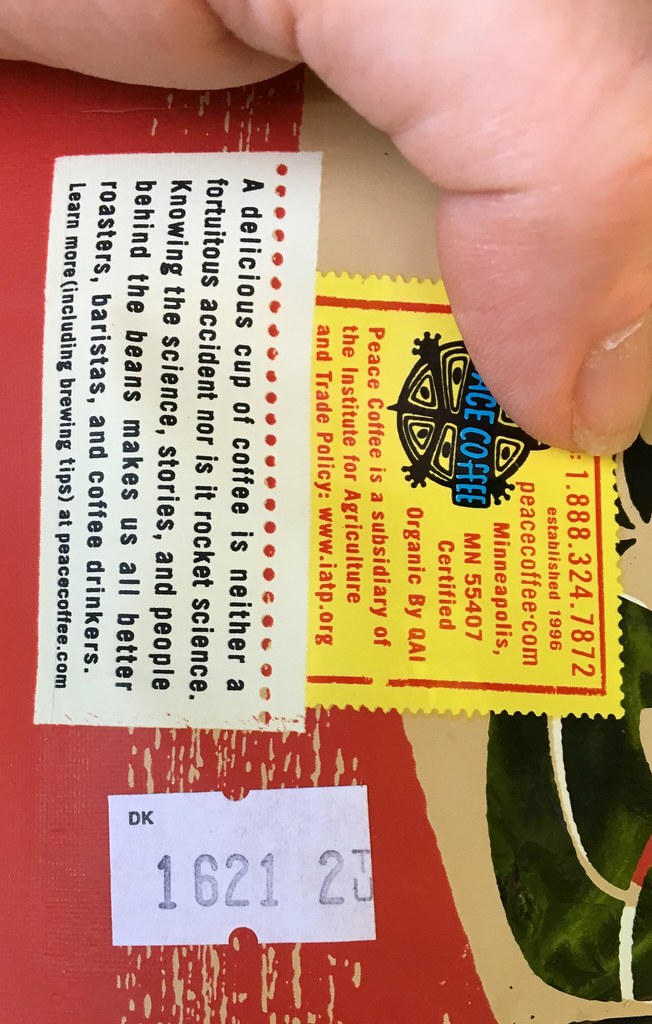 |
| See the code on the sticker? YYWWD (2016, week 21, Day 2 (Tues) |
Very fresh coffee is still outgassing CO2 from the roasting, so the air-tight containers should pressurize, and the ones with valves should allow it to escape. Anyway, here are the containers:
Container 1: 3-ounce glass spice jars with a metal screw-on lid. They held 33 grams of coffee beans easily, with only little headspace. http://www.containerstore.com/s/kitchen/spice-storage/3-oz.-glass-spice-bottle/12d?productId=10013579
 |
| I got the ones with a metal lid. There is no rubber seal, so hopefully they are airtight. |
***
Container 2: 3-ounce acrylic spice jars with a bale-top and silicone or rubber seal. These barely held 33 grams of coffee (I had to hold the lid closed, shake the jar slightly so that coffee would work its way into the recessed lid, then latch it closed). http://www.containerstore.com/s/kitchen/spice-storage/acrylic-spice-jar/12d?productId=10011992

***
Container 3: 4.25 oz/125 ml Fido bale-top canning jar with a rubber seal. These held 33 grams of coffee easily, with more headspace than I'd like. Fidos are well-liked in the home-fermenting world, because they allow CO2 to escape when pressure builds high enough, without letting any air back in (i.e. if air was allowed back in, mold would grow on the surface of the ferment, and that rarely happens with the Fidos). http://www.amazon.com/125-Terrine-Hermetic-Canning-Storage/dp/B00DH08GRE (we got a better price than what is shown here - shop around).

***
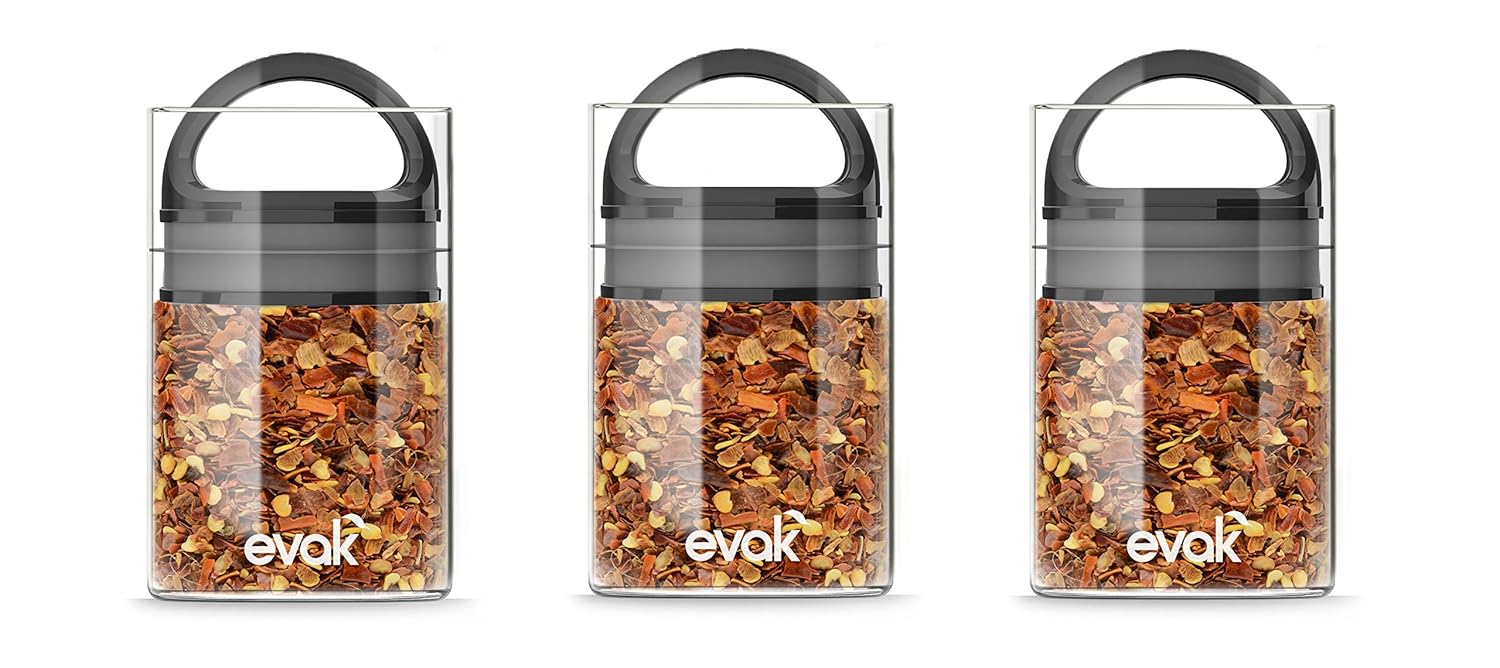
Container 4: Prepara Evak Mini containers - they shrink down to the surface of the coffee, and allow CO2 to escape. They also have a valve that prevents air from getting back in. 33 grams filled them about 1/2 way or thereabouts. They are very well-liked among coffee enthusiasts. http://www.amazon.com/dp/B00UMXUG54/
***
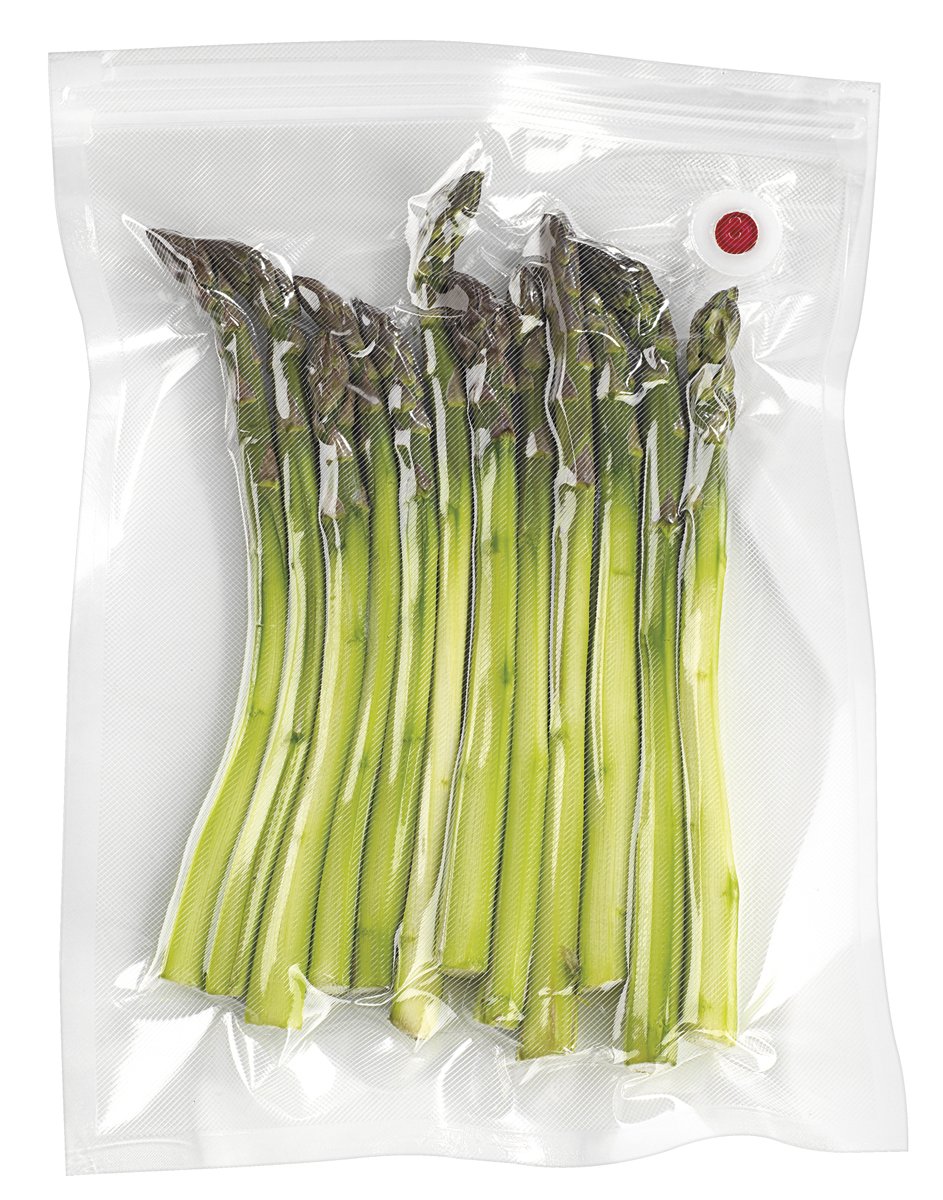
Container 5: One quart Waring Pro vacuum bags (ignore the asparagus - it was a much better picture than of an empty bag). Don't bother with the Ziploc or Freshsaver versions of these bags. You'll be lucky to get a second use out of them. The Waring Pro bags will last 20+ uses, if handled gently. I used two bags for each week: one I intend to remove accumulated CO2 as it ougasses, revacuuming every day or so until the outgassing stops, the other I'll leave puffed up. In my current storage methods, I remove the excess CO2. http://www.amazon.com/Waring-PVS1000CGB-1-Gallon-Pistol-Reusable/dp/B009O9VI86/
My intent is to do a cupping each week, to see how the beans survived the storage methods over time. My daughter will mix the samples (assign a code to each), so that when I evaluate the taste of the coffee made from the beans, I will not know which sample is which. I'll take notes on my findings, but will not look at the results until all four weeks are complete.
I intend to repeat the experiment every month for 4-5 months, using the same coffee each time. Each month I will vary the time past roasting. This month, the coffee is roast+1 (i.e, I packed the samples one day after roasting). Hopefully next month I'll test roast+0. This should measure the effect of the CO2 outgassing (40% of the CO2 is lost in the first 24 hours) on storage. Eventually, I intend to attempt (somehow) to add CO2 to the beans if they are older, to prevent the beans from being packed with any O2. But, we'll see.
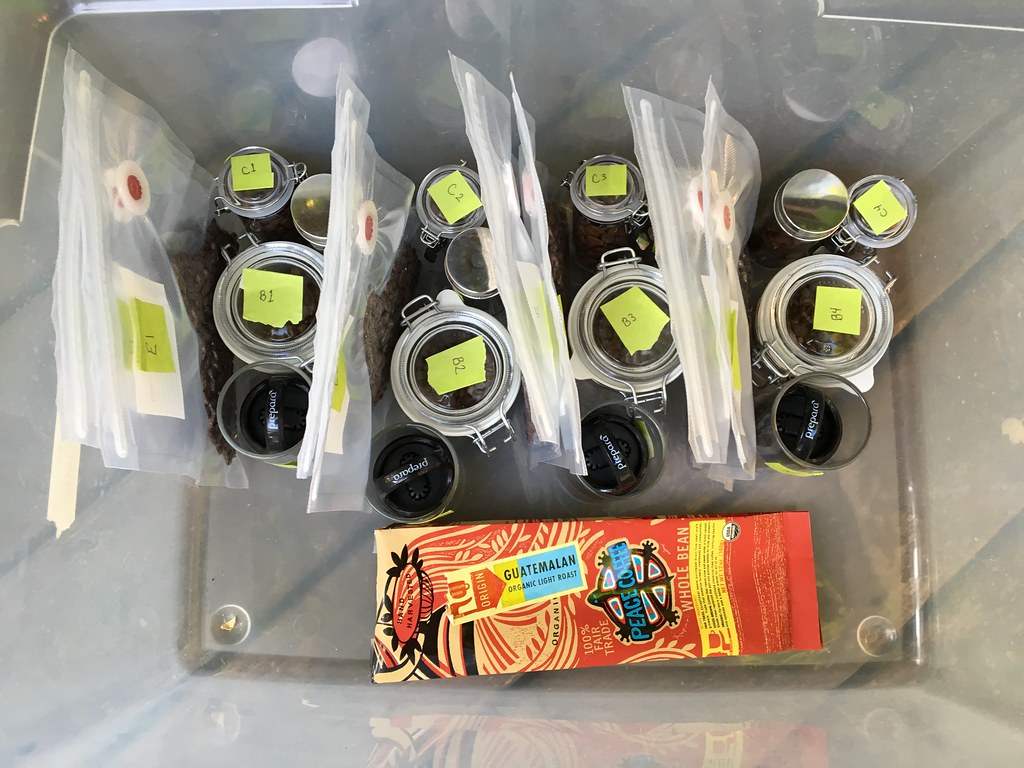
The coffee came from Peace Coffee, a fairly large Twin Cities roaster. They are big enough that I'll be able to get this same coffee month after month (though they cannot guarantee that it will come from the same batch of green beans, but I can't control for everything), but small enough that they have the flexibility to work with someone like me who only wants 2 pounds of coffee, and think my geekiness is totally cool. Only drawback is that their roastery is only open 8am-4pm Monday-Friday (in other words, during working hours, 50 minutes from my home).
Update: The next morning, I got more bags, and vacuum-packed four more samples, and froze them. In the past, I'd decided that freezing beans made them taste funny, but due to recommendations from someone online, I decided to throw freezing into the mix.

