Showing posts with label grinder. Show all posts

Wednesday, July 27, 2016

Grinder Review: OE Lido 2

So, I've read a LOT about Orphan Espresso's Lido 2. People rave about the grind consistency, the stepless adjustment that makes fine-tuning your grind easy, and the quality of the product.


So, eventually my curiosity overcame my sticker-shock ($175 for the grinder, plus an add-on lid for the hopper, and shipping brought the total to $205), and bought it. My husband and I each get an "allowance" of discretionary spending each month, and this meant I got only a partial allowance for FOUR MONTHS.

Do I like it? Yeah, I really, really do. It's a glass and metal grinder that feels like a precision machine.

And, it's a beast.

It's heavy, weighing 3.5 pounds (about 1.5 kilograms), and at 13" tall, it's about the size of one of those pepper grinders that waiters wield over your salad at places like Olive Garden.  And it just feels sturdy and well built.

It's a great size for gripping between your thighs to brace it when sitting, or if you are standing, I use the "swirl" motion they suggest - you brace the bottom of the grinder agains your thigh, and turn the crank to grind, while swirling the body of the grinder in the opposite direction.  Despite its size and weight, the ergonomics are the best of all the hand grinders I've used.

One huge plus is that the burrs are much bigger than the ones in my other grinders, and the mechanical advantage is kind of wonderful. I haven't counted the turns, but it takes about 1/2 the time to grind the beans for my daily cup.


So, since I value consistency, I'll do my usual pros and cons:

Pros:

  • Most consistent grind I've seen so far in a hand grinder.
  • Beautifully designed and sturdy. 
  • All parts are replaceable should something break.
  • Very large burrs cut the grind time in half
  • Easy to adjust.
  • Cleaning and maintenance tools, and a stand are standard.
  • Ergonomics are really good.
Cons:
  • Expensive - $175.
  • Doesn't come with a lid (but you can buy one separately).
  • Heavy and bulky. You can travel with it, but I wouldn't want to.
  • Sometimes a bit hard to get the grind started (something that's a problem in nearly all hand grinders, and this one is actually somewhat better than most).
  • Steel (not stainless) burrs, so could rust (very very unlikely, if you treat it as the company recommends, plus steel stays sharp longer than stainless does)


To adjust the grind, you loosen/unscrew the locking ring (the narrow silver ring, just above the wider silver ring, just above the glass catch chamber), and twist the wider ring/catch chamber to loosen or tighten the burrs.  Then you re-tighten the locking ring.  I STILL wish the vertical lines/marks had numbers, but the reason they don't, is that you can actually twist the adjustment ring more than one full revolution.

Not shown in the picture is an add on - a lid for the top of the grinder that was actually designed for their Lido 3 (an all-plastic model with a folding handle for travel, which is about the same size of the Lido 2, but a good pound or so lighter).  I HATE it when beans jump out of the hopper, and while the hopper is tall and narrow enough that jumping bean bits are rare, it was still worth it to me to spend the few extra dollars to get the lid.

The grinder does produce static, not something I've had to deal with before (the burrs are steel, rather than ceramic, so that might be the difference).  I simply put the water in the microwave to heat, grind the beans, then let the grinder sit until the water is ready. The static dissipates during those few minutes. Some folks sprinkle a drop or two of water on top of the beans in the hopper just before grinding (and those who do it says it works great), but that seems like a bad idea to me. These are steel (not stainless) burrs and could rust, and even though they get conditioned by the coffee oils from the beans, I don't want to introduce more moisture if I can avoid it. I also backed a coffee sieve on Kickstarter, and I suspect that the water droplets could well interfere with that process, causing the fines to stick to stuff.  So, I use OE's suggestion to let the grounds sit for a few minutes until the static dissipates on its own.

Does the grinder produce a better cup of coffee?  Yes, it does.

I can't rule out confirmation bias, though - I mean, I want it to produce better coffee, given that I spent so much money on it.  ALL grinders produce some inconsistencies: boulders - overly big chunks that manage to fit through the burrs without getting chewed up, that impart sour flavors, and fines, the powdery particles that over-extract, producing bitter flavors), and the Lido 2 is no exception.  But, it does produce the most consistent grind by far, and I think I detected a legitimate improvement in my cup of coffee.

Finally, a note about Orphan Espresso. They are a small-business, and started out by restoring vintage coffee grinders, and got so intimately familiar with what makes a good grinder, that they started designing their own.   Their grinders are so good, that they were featured on NPR: The Search For The Perfect Cup Of Coffee Can Be Such A Grind(er)

Wednesday, May 4, 2016

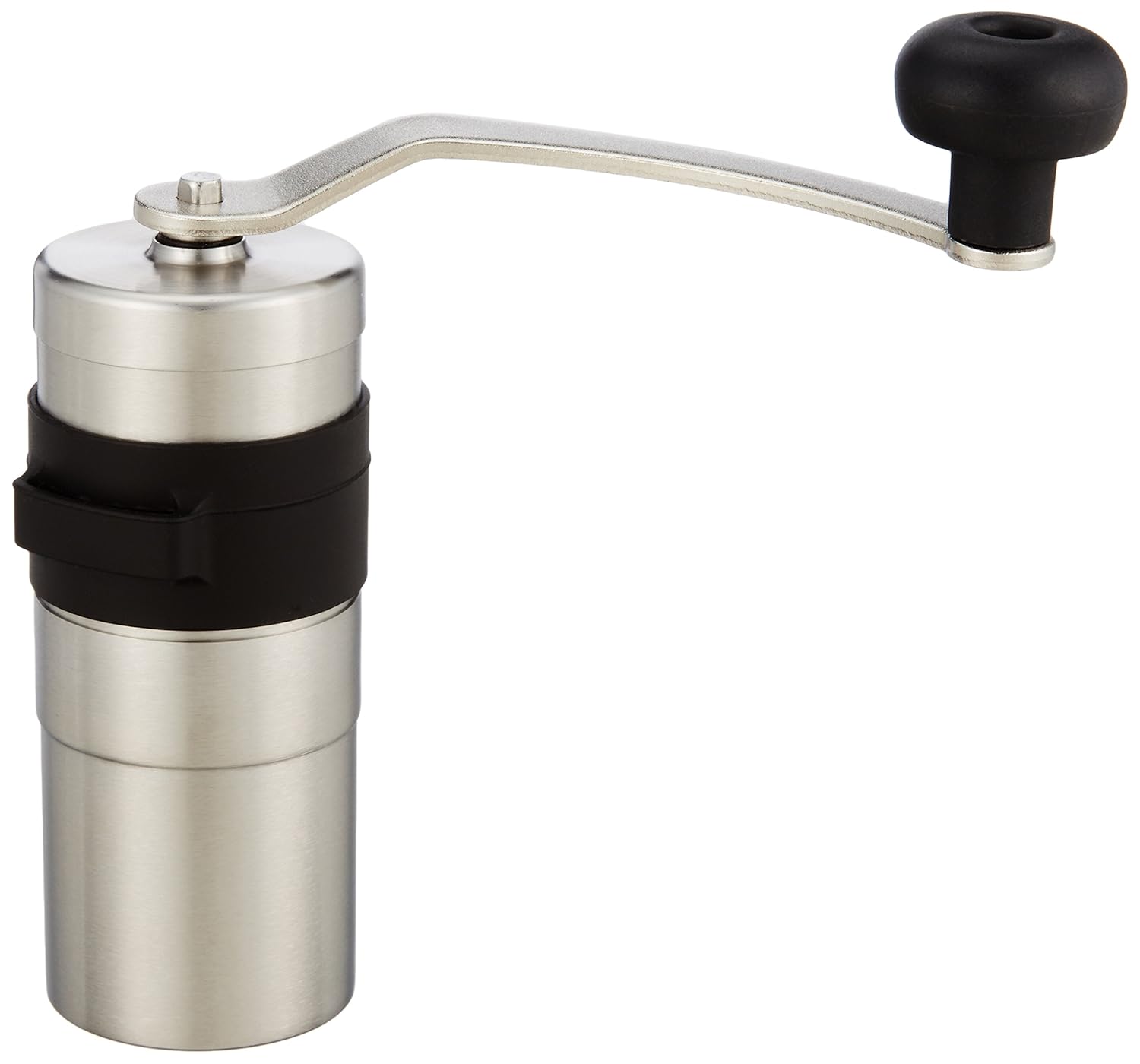
Grinder Review: Porlex Mini Stainless Steel Coffee Grinder

This is my fourth grind - got it in August of 2014, to keep at work (it replaced the Hario Mini that I sent to a friend).  This thing is exactly like the bigger Porlex, but shorter (and has a black silicone band), so the review will sound familiar.

Pros:
  • Like the Hario Mini, this is small enough to grind directly into an Aeropress.
  • Fits nicely in your hand, but this thing is TINY. It holds no more than about 2 TBSP of beans, and really is meant to make a single cup.  
  • Nice crank arm length.
  • Black silicone band includes a little loop to hold the handle when it's not in use, but I found it a hassle.
  • Outer body is all stainless steel, making it a durable choice for travel or everyday use.
  • Easy-to-adjust grind mechanism (see below) - you twist a little clicky bolt on the bottom of the top chamber.  
  • Slightly better-than-average grind consistency

Cons:
  • Crank arm flies off for some people, though I never found it a problem.
  • Like many small grinders, it is a little awkward to grind with it. It's short body makes it more awkward than the bigger Porlex.
  • No way to "remember" your settings for different grinds, other than by counting clicks. Not a big deal if you don't plan to adjust it.
  • Only slightly-better-than average grind consistency, and given it's price point ($35-$65 depending on the direction the wind is blowing, but usually around $45 or $50), I'd really like it to be better. 

This is my current work grinder, except that since I'm currently working from home, it's sitting unused in a box of office supplies.  

It really is a great little grinder (with an emphasis on little).

Oh, and Amazon carries some replacement parts.


Wednesday, April 27, 2016

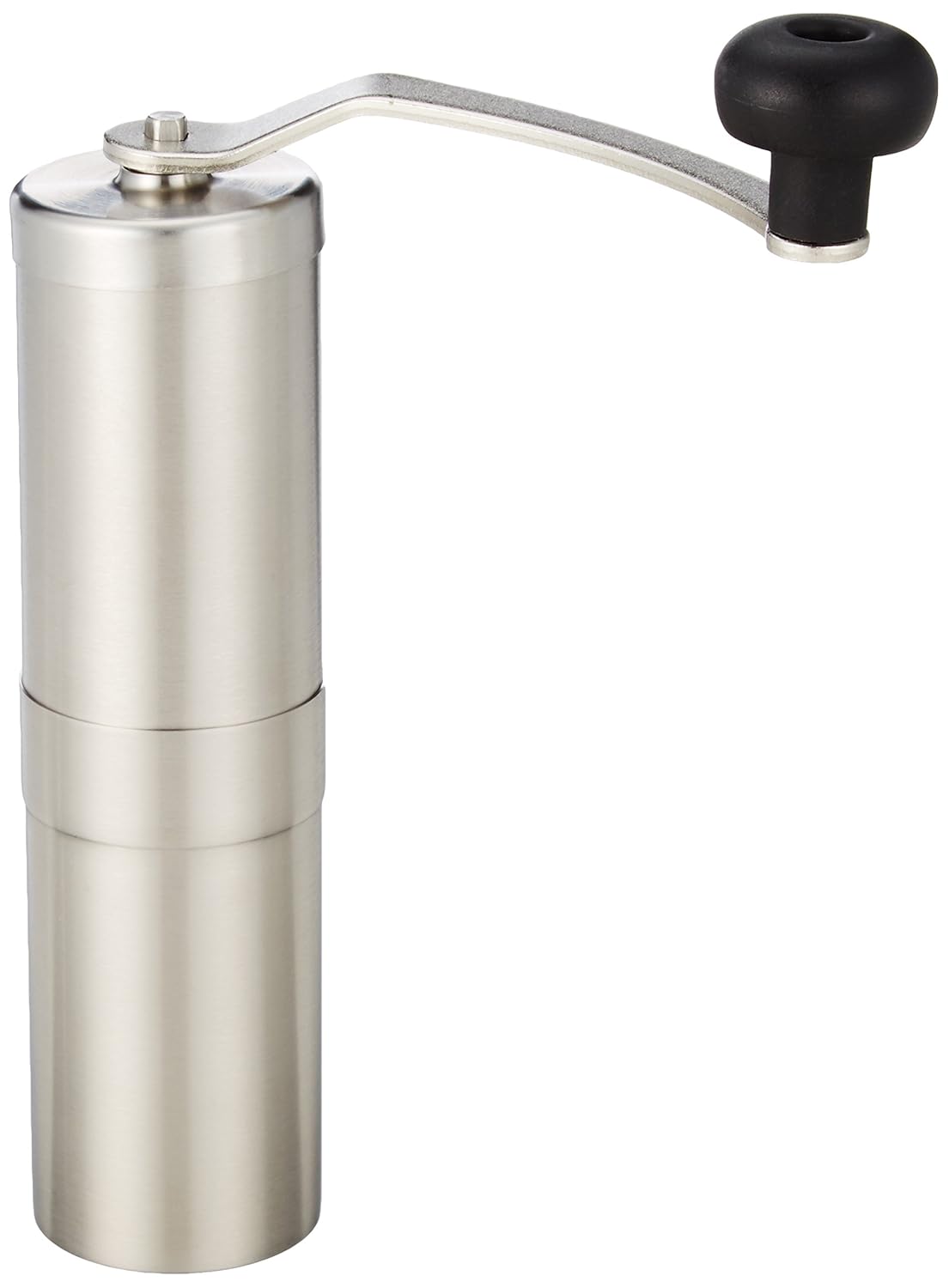
Grinder Review: Porlex JP-30 Stainless Steel Coffee Grinder

This is my third grinder - bought in the spring of 2014 as my main grinder to use at home. It got daily use for nearly 2 years, and is still going strong.

Pros:
  • Like the Hario Mini, this is small enough to grind directly into an Aeropress.
  • Fits nicely in your hand, and is tall enough to make it somewhat easier to grip between your thighs.
  • Nice crank arm length.
  • Outer body is all stainless steel, making it a durable choice for travel or everyday use.
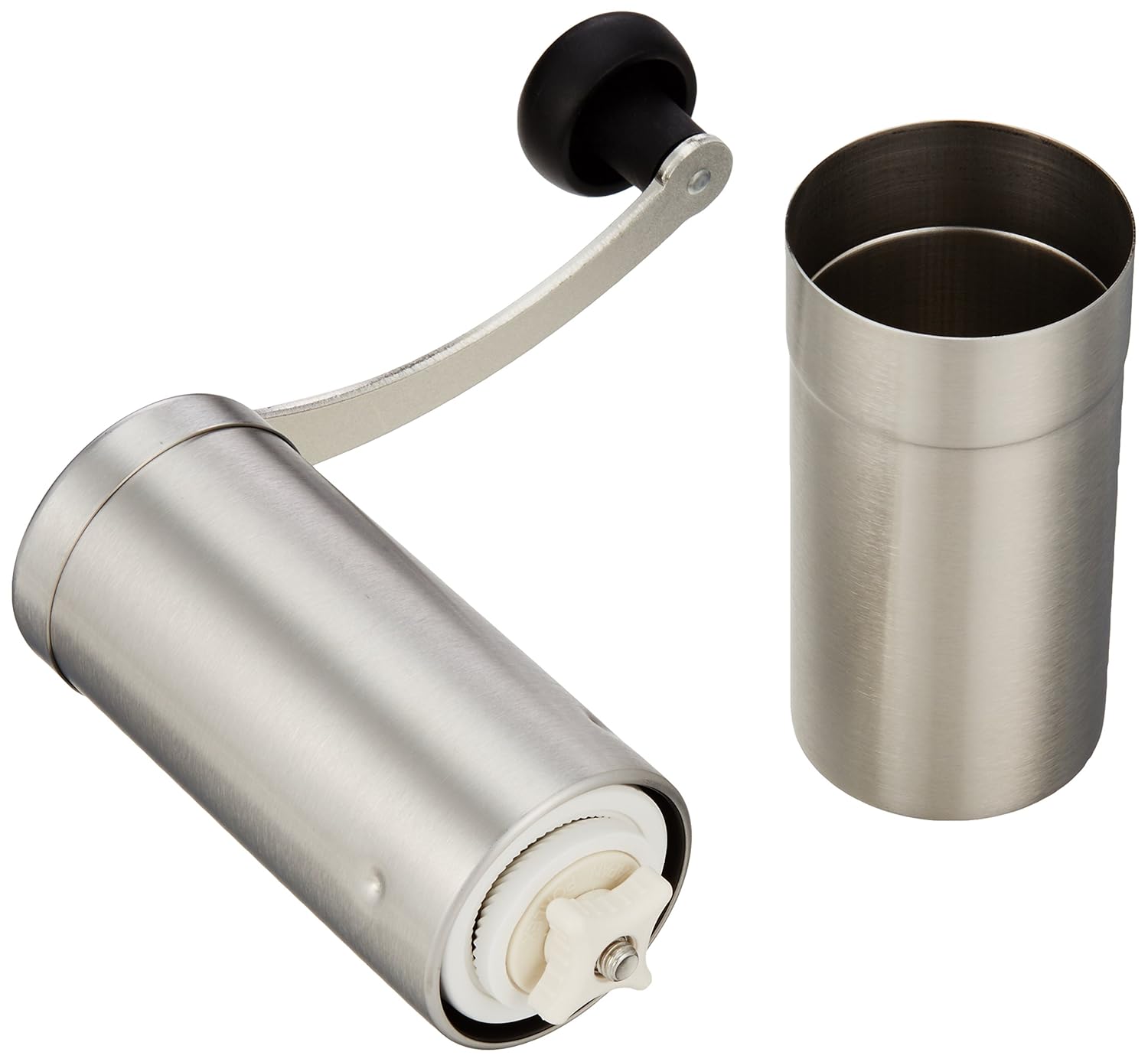
  • Easy-to-adjust grind mechanism (see below) - you twist a little clicky bolt on the bottom of the top chamber.  
  • Slightly better-than-average grind consistency


Cons:
  • Crank arm flies off for some people, though I never found it a problem.
  • Like many small grinders, it is a little awkward to grind with it.
  • No way to "remember" your settings for different grinds, other than by counting clicks. Not a big deal if you don't plan to adjust it.
  • Only slightly-better-than average grind consistency, and given it's price point ($40-$70 depending on the direction the wind is blowing, but usually around $50-$60), I'd really like it to be better. 


See the white nut on the bottom? That's what you twist to adjust fineness.
Note: if you install it upside down, it doesn't click. 

As I said before, this was my every-day grinder for nearly two years. I was happy with it, but wanted to try out the monstrous Lido 2, which kind of blows the Porlex out of the water (as well it should, given how expensive the Lido is). Currently I have it set to a fine grind, for use with my only occasionally-used Aeropress.  It actually does a far more consistent grind when grinding in the finer ranges, but it's a bit of a workout to grind a couple of tablespoons of beans with it.

The upper chamber holds about 6 TBSP of beans.

I do recommend this one - pretty highly.


Wednesday, April 20, 2016

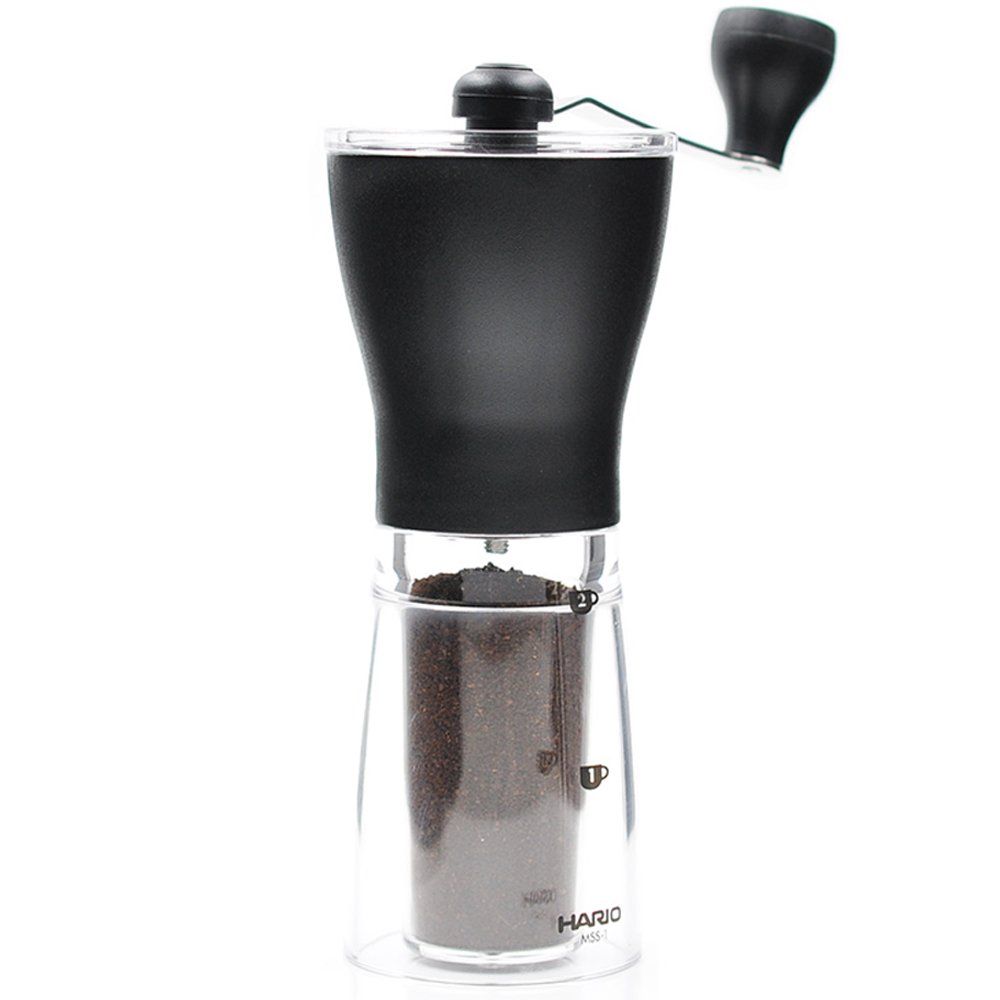
Grinder Review: Hario Coffee Mill Slim Grinder, Mini

This was my second grinder - bought it early in 2012 to keep at work.


Pros:
  • Great price point - $20-ish for a decent little grinder
  • Small size - only makes enough for one or maybe 2 cups of coffee, so good for travel
  • Convenient adjustment mechanism (you twist a little clicky-nut at the bottom of the hopper)
  • Hopper is small enough that you can grind directly into an Aeropress.
  • Handle comes off for storage and to put beans in the hopper
  • Lid
  • Comfortable to hold in your hand
  • Average grind consistency


Cons:
  • Small size - If you're grinding for multiple cups, you might have to refill the hopper and empty the reservoir.
  • No way to "remember" your settings for different grinds, other than by counting clicks. Not a big deal if you don't plan to adjust it.
  • Too small to grip between thighs very well, and ergonomics when just holding it in your hand are a little awkward (but better than bulkier ones).
  • Handle flies off while grinding for some folks, but I never found it to be a problem.
  • Average grind consistency
All in all, a fine, inexpensive little grinder that produces the typical grind consistency of inexpensive grinders.  A fine choice for someone just getting started with grinding their own beans.

Check out Coffee Brew Guides pages on this grinder (including their DIY modifications):
When my Kyocera got lost in the mail, I ended up sending this one to the person who'd bought the grinder from me.  She sent me a pic of using it to grind for her Moka pot. :-)


Saturday, April 16, 2016

Grinder Review: Kyocera Advanced Ceramic Coffee Grinder

This was my very first grinder. I bought it back in 2011.
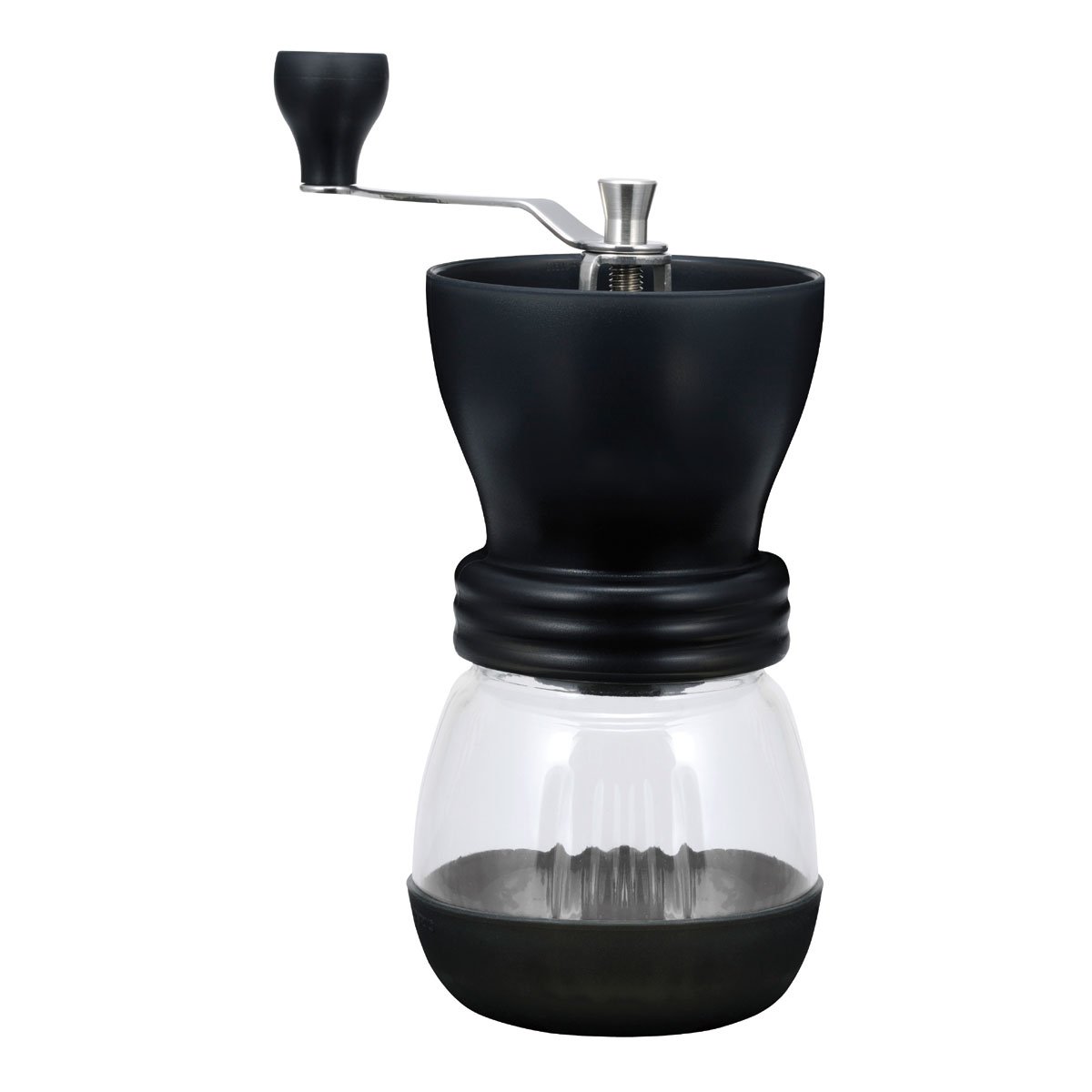
Not sure what makes this "advanced," but this is a decent grinder.  It doesn't produce particularly consistent grinds, nor particular inconsistent grinds, which I think is pretty normal for inexpensive manual grinders. Not shown is a little screw-on-lid for the lower chamber, should you grind too many beans, though that's not a selling point for me, as I only grind enough for one brewing at a time.  

Pros:  
  • $35-ish.
  • Nice size.
  • Handle stays on, and is a nice length.
  • Newer models may come with a lid - do your homework.
  • Can screw onto a narrow-mouth canning jar (I haven't tried it, though).
  • Average consistency grounds.
Cons:
  • Ergonomics are a little awkward. Too big to hold in your hand conveniently, too small to grip between your thighs to hold it steady.
  • No lid.  Bean bits jump out of the hopper.
  • Adjusting the coarseness of the grind is inconvenient.  You unscrew the bolt that holds the handle on, lift up this little toothed thing, twist the shaft to loosen or tighten the grind, put the toothed thing back on, then the handle, then screw the bolt back on.  Lots of trial and error, but that's not a big deal if you don't intend to change the settings.
  • Average consistency grounds.

Honestly, if you like the looks of this grinder, I'd consider getting the Hario Ceramic Coffee Mill Skerton. It looks to be exactly like this one, but has higher ratings (actually, they have same rating - 4.3 out of 5 - but double the number of people have rated it), is about $6 cheaper at the moment, and has a LID.

Interestingly, I sold this grinder to a friend of mine who intended it to live in her camper for weekend trips.  It's the first and only package I've ever had go missing.  Opened an investigation and everything - evidently the box got crushed, and the parts separated from each other. The USPS sent me the mailing labels from it with an "oops, sorry" note.  The irony? The friend it was going to is a postal carrier.  I felt so bad, I sent her my second grinder after I upgraded it.